The Mindset Shift: Selling Solutions, Not Stuff
The days of simply finding a cheap gadget in bulk and flipping it on Amazon are over. However, the opportunity for massive profit is bigger than ever. In fact, today’s Amazon success is built on a simple principle: Data Arbitrage. This means, using advanced tools—often AI-driven—to find unmet customer needs (the “pain points”) that your competition missed.
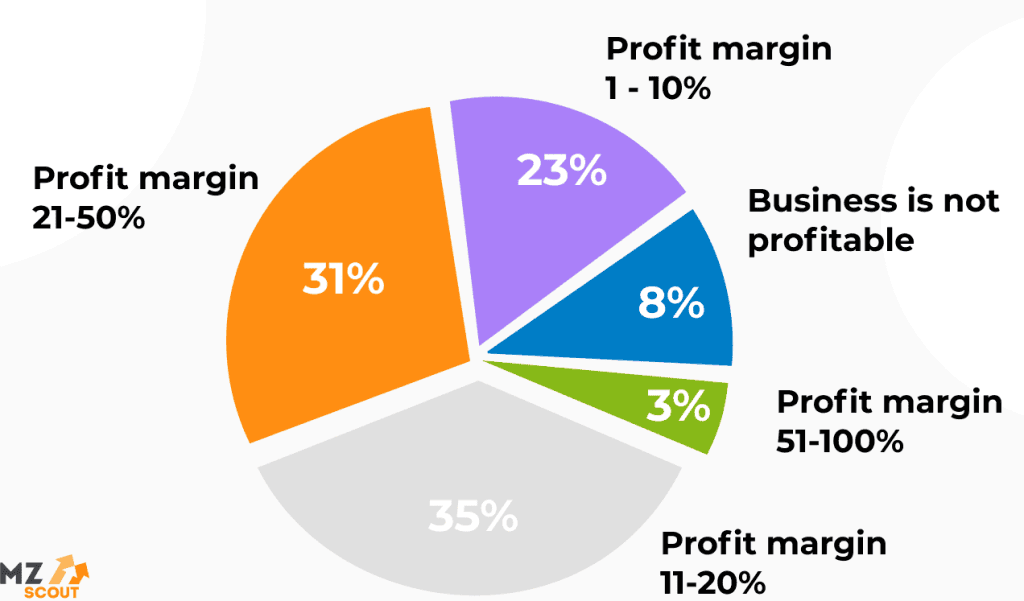
Amazon Sellers Make
Consequently, you are no longer just a seller; you are a Niche Hunter. Specifically, your job is to find the gap between what customers want and what the market offers. Therefore, this shift requires a new mindset, as shown in the comparison below:
| Old FBA Mindset | AI Niche Hunter Mindset (The 10x Approach) |
|---|---|
| Compete on Price | Dominate on Solution & Value |
| Find Trending Products | Find Frustrated Customers (Pain Points) |
| Manual Keyword Research | AI Review Gap Analysis |
| 1x Effort, 1x Return | 1x Effort, Autonomous Income Stream |
To clarify, instead of selling stuff, sell solutions to specific problems.
Section 1: The 5-Step AI-Powered Niche Hunter Blueprint
To unlock truly viral products and stable, scalable income, stop looking at what’s trending and start looking at the data gaps. Therefore, follow this non-obvious blueprint:
1. The Review Gap Analysis
Your competitors have already done the hard work of collecting feedback. However, most sellers ignore this crucial resource. Instead, therefore, use AI tools (like custom GPTs or specialized analysis software) to scan thousands of 1-star and 2-star reviews in your target category (e.g., “Home Organization”). Crucially, your goal is to identify a recurring frustration that no current product solves. In short, this frustration is your niche.
High-Value Target Keywords (The Profit Zones): The highest converting keywords are those that contain both a problem and a specific modifier. For example, target these long-tail examples:
- “Waterproof hiking backpack for tall men”
- “Non-slip yoga mat for sweaty hands”
- “Ergonomic pillow for side sleepers with neck pain”
- “Sustainable coffee pods reusable Nespresso”
2. Micro-Niche Validation and Low-Competition Sourcing
Once you identify the pain (e.g., “All dog toys break in 10 minutes”), you must find a micro-niche product that solves it. For instance, instead of selling “dog toys,” you sell “indestructible chew toys for large breeds that weigh over 80 lbs.” Consequently, because this niche is so specific, your competition instantly drops. Furthermore, for logistics and sourcing details, refer to the Official Amazon FBA Seller Central Guide.
3. Mastering the ‘Forever Categories’
Viral success comes from solving problems in categories that never go out of style. Therefore, target these high-demand categories, but always focus on the niche within them. The following table clarifies the opportunity:
| Forever Category | Niche Pain Point Example | High-Profit Angle |
|---|---|---|
| Home Organization | “Drawer dividers don’t fit deep/oddly sized drawers.” | Modular, adjustable, premium bamboo/metal solutions. |
| Pet Supplies | “Chew toys break in minutes, causing a choking risk.” | Indestructible, veterinarian-endorsed, patented materials. |
| Health & Wellness | “Supplements cause severe stomach discomfort.” | Delayed-release capsules, highly specific nutrient combinations. |
| Baby & Child Safety | “Monitors constantly lose WiFi connection.” | Dual-band systems with redundant local monitoring. |
Always remember, moreover, the secret is selling the premium solution in a mass market category.
4. The 10x Listing Optimization
Once your product is sourced, your listing must be AI-optimized. However, don’t just use keywords. Instead, structure your listing to answer the exact pain points you found in Step 1. Crucially, furthermore, use AI tools to generate 10 variations of your product title, and A/B test the one that drives the highest click-through rate. Ultimately, this is pure conversion engineering.
5. Supply Chain Automation and Margin Defense
Profit is worthless if your logistics drain it away. Consequently, in light of these costs, focus on these two points:
- Audit Your Logistics: Constantly review fulfillment and shipping costs. Even so, a $0.50 saving per unit leads to 10x profit at scale. Review the latest global shipping trends here Global Supply Chain Data.
- Defend Your Price: Do not compete on price. Instead, justify your premium pricing by clearly articulating the solution your product offers in your listing and images.
Section 2: The Inspiration: The Only Limits Are Your Data Skills
You are standing at the edge of the most democratized wealth-creation machine in history. Unlike traditional business, you don’t need millions in capital; rather, you need sharp data analysis skills.
Think of the massive success stories: they weren’t about the best product, but instead, the product that was best positioned to solve a unique frustration. Therefore, stop seeing Amazon as a crowded marketplace. Instead, view it as the world’s largest, most detailed data source for identifying human needs.
Your motivation must be this: You are building an autonomous income stream. Specifically, you invest time upfront into the blueprint, the AI analysis, and the logistics, and consequently, the system delivers profit while you sleep. Furthermore, this income allows you to fund your next big idea, accelerating your financial independence. As a motivational reference on building passive income, explore this Forbes article on passive income strategies.
Conclusion: The New Definition of FBA Success
To summarize, ultimately, success in the Amazon FBA ecosystem has moved from finding inventory to finding information. Consequently, by implementing the 5-step AI-Powered Niche Hunter Blueprint, you stop guessing, stop hoping, and start engineering profit with surgical precision.
Which of the five steps will you prioritize this week to transition from a general seller to an AI-powered Niche Hunter?
FAQ: Clarifying the AI Niche Hunter Model (H2)
Q: What specific AI tools are required to perform the “Review Gap Analysis”?
A: You don’t need expensive proprietary software. Instead, you can effectively use Custom GPTs (or similar LLMs) trained specifically to scan exported Amazon reviews (e.g., thousands of 1-star reviews) and quickly identify the 3-5 most common, recurring customer pain points. Specialized review analysis software can also accelerate this process.
Q: Is this “Data Arbitrage” strategy allowed by Amazon FBA?
A: Absolutely. This strategy is based on smart market research and using publicly available customer feedback to create a better product. It relies on superior data analysis, not on black-hat tactics or violating Amazon’s terms of service. In short, you are serving customers better.
Q: How much capital is truly required to start this AI-driven model?
A: While sourcing still requires capital for inventory, this model reduces financial risk significantly. The initial investment shifts from guessing on large inventory runs to investing in data tools and small test orders. Crucially, your main investment is time spent on analysis and validation (Step 2), which minimizes wasted capital.
Q: How quickly can I expect to see results compared to traditional FBA?
A: Data-driven validation shortens the launch cycle. Because you are entering a niche with a validated problem/solution, your initial ad spend is more efficient, and conversion rates are higher. Therefore, the time-to-profit is usually faster and more predictable than launching a generic product into a saturated market.
Tags: Amazon FBA, E-commerce, Passive Income, Niche Marketing, Data Arbitrage, AI Business, Entrepreneurship, Logistics