
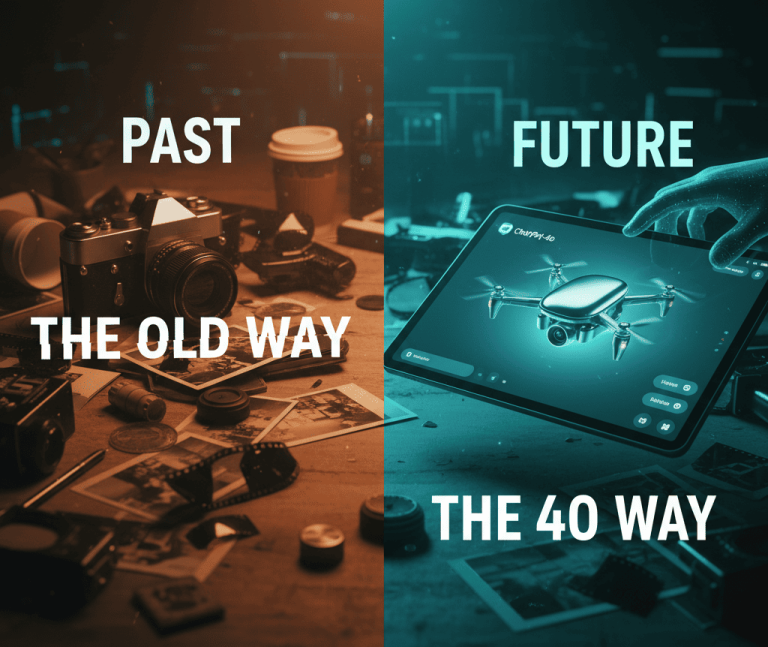

The Viral Secrets of ChatGPT-4o Image Prompts: Hidden Architecture
Summary: ChatGPT-4o fundamentally changed AI image generation by using an autoregressive model. This method creates ultra-realistic images, perfect text, and complex image editing. This drives a new wave of useful and instantly viral visuals.

Viral ChatGPT-4o Image Prompts: The Art of Invisible Design
The world of generative AI is crowded. However, few models truly change how we design. The arrival of native image generation in ChatGPT-4o is a major event. Importantly, this isn’t just DALL-E 3 rebranded. Instead, it’s a big architectural change. Specifically, this shifts the process from a fun new tool to something truly useful.
For creators and marketers, the effects are immediate. In fact, viral images from AI no longer need strange novelties to grab attention. Instead, success needs three valuable traits: extreme realism, exact text, and easy editing. Ultimately, these features let users replace whole creative jobs—like product photography or complex infographics—with a few simple prompts.
This report is a GIANT exclusive. First, it explains the mechanics (how it works) behind 4o’s viral success. It gives the specific, rare examples you need to use the system well. Moreover, we show why certain prompt structures stand out. They create assets that look like professional agency work, not just AI art.
The Autoregressive Advantage: Why 4o Images Go Viral
To begin with, to understand a viral ChatGPT-4o image prompt, you must first know how it differs from older tools. For example, most previous top models, like the DALL-E series, use a diffusion architecture. To illustrate, diffusion models begin with pure noise. Then, they slowly change it until the image matches the prompt. While this is good for general creativity, this method struggles with complex instructions. This includes exact text placement or keeping characters the same.
A New Architecture: Precision by Design
GPT-4o, by contrast, uses an autoregressive model structure to make images. This means the model builds the image piece by piece, in order. Each new visual part knows what came before it. Therefore, it uses the prompt’s full context at every step. Consequently, it works like writing a novel word-by-word: the overall coherence stays strong.
This deep integration helps GPT-4o “think” clearly about visual needs. As a result, the model treats complex ideas as clear instructions, not just art tips. Ultimately, this is the invisible advantage. In essence, it makes simple image requests turn into useful, shareable assets.
The Problem of Perfect Text Solved
The biggest viral breakthrough for GPT-4o is its perfect handling of typography (text). Indeed, for years, AI images had “AI handwriting.” This meant confusing text, scrambled letters, and misplaced words that instantly looked fake. In turn, this severely limited professional use.
The autoregressive process understands the text in the prompt clearly. Because of this, it can show complex text correctly and blend it into the image naturally. This ability alone has started a new wave of viral content. In short, it replaces assets that needed expensive design software, like social ads, book covers, and branded mockups.
The Three Pillars of a Viral 4o Prompt
Viral content from 4o happens for a reason. Instead, it relies on three advanced prompting techniques that use the model’s unique power. Furthermore, these pillars go far beyond simple descriptions. They use professional art direction and visual design skills.
Pillar 1: Multimodal Mergers (The Photoshop Replacement)
To begin with, GPT-4o’s ability for Image-to-Image Transformation is the strongest way to create viral, useful content. Users can upload one or more existing images. Next, they tell the model to make complex edits that don’t destroy the original quality. The results look just like professional design software.
For example, this technique creates “photo shoots that never happened.” A small e-commerce brand uploads a flat product shot and a lifestyle photo. Then, they tell the AI to merge them into a high-end, professional ad. This saves time, money, and planning. Therefore, the finished high-quality visuals are instantly shareable and valuable.
Viral Technique: Upload two separate images (A: Product, B: Scene). Then, prompt 4o to seamlessly combine them, maintaining photorealistic consistency in light, shadow, and texture.
Pillar 2: Perfect Typography and Infographics (The Data Visualizer)
In addition to this, the reliable text embedding turns GPT-4o into a strong visual communication tool. Viral content often simplifies complex ideas. Hence, GPT-4o easily changes structured text (like lists or steps) into engaging diagrams or infographics.
Users don’t need a long, fancy description. Instead, they simply give the exact text they need and the format (e.g., “Step 1,” “Product Name,” “Title”). Importantly, the model follows these instructions. This ensures the final image is accurate, not just attractive. Consequently, this is highly valuable for making educational content or short business explainers that often dominate LinkedIn feeds.
Actionable Insight: Always enclose mission-critical text in quotes in your prompt. Additionally, explicitly define the Style and Layout for the text. For instance, use a specific color palette (e.g., “Use a pastel palette of hex #B0E0E6 and #FFDAB9”).
Pillar 3: Cinematic Composition Control (The Virtual Director)
Older models gave vague results for style terms like “cinematic.” However, GPT-4o shows a much deeper understanding of film and photography terms. Viral images often use strong drama, unusual views, or advanced lighting.
Therefore, the best viral prompts for 4o use specific camera and light terms. The model correctly translates terms like “Dutch angle,” “long exposure,” “anamorphic lens flare,” “golden hour,” and “low-key dramatic lighting.” In effect, this detailed control lifts the output past simple digital art. It moves into photojournalism and film concept art, letting the creator act as a director.
Advanced Tip: Pair the artistic style with a highly technical camera setting for unique texture. For example: “A hyperrealistic portrait in the style of film noir, captured on a 50mm lens with dramatic chiaroscuro lighting.”
Exclusive Deep Dive: Prompt Templates for Guaranteed Virality
We have distilled the most effective, high-utility prompt structures being used by top creators to generate scroll-stopping content with ChatGPT-4o. Specifically, these templates are designed to hit all three viral pillars simultaneously.
Template 1: The Zero-Budget E-commerce Mockup
This structure targets the most frequent viral application: generating professional product shots without a photoshoot. It leverages precision, text rendering, and cinematic lighting to create assets ready for an Instagram campaign.
| Section | Prompt Element | Purpose |
|---|---|---|
| Product Focus | A sleek 35mm film camera, minimalist silver body, highly detailed. | Defines the subject and required level of detail. |
| Scene & Mood | Resting on a slab of rough, wet concrete, next to a single, deep blue silk scarf. | Sets the sophisticated environment and texture contrast. |
| Typography & Placement | Embed the text ‘Capture Analog’ discreetly on the camera body in a white, minimal sans-serif font. | Tests 4o’s ability to render perfect, integrated text. |
| Composition & Style | Photorealistic studio shot, low-key dramatic lighting, depth of field focus on the camera, 4K resolution. | Directs the virtual camera and lighting setup for a high-end, premium feel. |
Expected Output Behavior: The image will look exactly like a $5,000 magazine advert. Furthermore, the text will be rendered perfectly on the camera’s body or lens barrel, blending naturally with the perspective and reflections.
Template 2: The Multi-Panel Narrative in a Single Frame
This template forces the model to execute a complex narrative flow in a non-traditional format—a highly shareable visual explainer or micro-comic.
| Section | Prompt Element | Purpose |
|---|---|---|
| Core Concept | Create a single, highly detailed illustration that tells a three-part narrative. | Establishes the core constraint: single image, multiple stages. |
| Panel 1 (Left) | On the far left, show a frantic office worker sitting at a desk overflowing with papers, illuminated by a harsh desk lamp. | Sets the starting scene and mood (chaos). |
| Panel 2 (Center) | In the center, show the same person calmly viewing a holographic AI flow chart, the papers neatly stacked. | Depicts the transition/solution (AI intervention). |
| Panel 3 (Right) | On the far right, show the worker relaxing in a garden chair, the city skyline far away, bathed in soft sunset light. | Sets the final, aspirational state. |
| Style & Text | Use a vintage comic book illustration style. Add the title ‘The Three Stages of Workflow Automation’ in bold, centered text at the top. | Guides the art style and utilizes perfect text rendering for the title. |
Expected Output Behavior: The AI will generate a cohesive horizontal image divided by visual cues (like color shifts or subtle frames), where the character remains highly consistent across the three distinct vignettes.
Consistency and the Multimodal Refinement Loop
GPT-4o’s design is excellent. However, making the same character appear in many images is still a challenge. Indeed, this needs smart prompt engineering. The autoregressive design helps consistency. However, the user must actively keep the visual elements connected.
Therefore, the best way is the Multimodal Refinement Loop. Essentially, this means you use the model’s first image as the starting point for the next one.
- Generation: Generate the base image: “A friendly, cartoon dog character with bright yellow fur and one green eye, running through a snowy forest.”
- Referencing: Subsequently, generate the next scene, referencing the first: “Using the exact style and character from the previous image, create a new scene where the dog is drinking hot cocoa by a fireplace.”
- Iteration: If the character details waver, upload the first successful image back into the chat and instruct: “Maintain the character details of this uploaded image, but now place him riding a tiny wooden sled down a hill. Focus on maintaining the exact eye color and fur shading.”
When you make the model re-analyze its own good output, you use the “reasoning” power of the GPT-4o system. In turn, this helps you create connected storyboards and themed series. These are much more shareable than single images.
Safety and Ethics: The Guardrails of Omnimodality
The realistic and multimodal power of GPT-4o demands strict safety rules. As detailed in theOpenAIBlog:IntroducingGPT−4o
, the model uses strong content moderation. This includes blocking both prompts and final images. This is very important. Without these rules, the Image-to-Image feature could be used to make harmful deepfakes or building plans.
In practice, viral prompts must follow ethical rules. For example, the model will refuse to make non-consensual images, copyrighted characters, or specific celebrity faces. As a result, the “viral edge” comes from real, clever use cases that push the tech forward. It does not come from breaking ethical rules. Ultimately, the model’s power is how useful it is to creators, not how much controversy it can cause.


